| Recommended Time | 3 nights, 4 days |
|---|---|
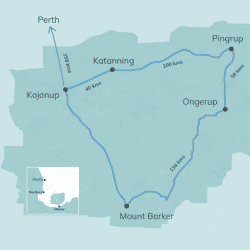
| Length | 959 kms |
| Roads | Sealed and suitable for caravans |
The best place to start this journey is at the very beautiful Gallery Aura, Albany Highway, Kojonup. Jill curates a beautiful collection of art and antiques, with lots of local & well-established artists for sale. While in Kojonup find out about the heritage of the town by visiting the Military Barracks, Elverd Cottage and old Post office. The Kojonup Visitor’s Centre at Kodja Place can arrange access. (08) 9831 0500
Voices, photographs, art and objects from Kojonup’s Noongar-Aboriginal and settler cultures are woven together in imaginative and richly-layered interpretations at Kodja Place. Enjoy yarns, billy-tea and damper in Yoondi’s Mia Mia with Noongar Elder Jack Cox.
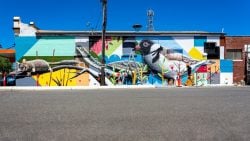
Head 40 kms east to Katanning to visit the Public Library & Art Gallery which will be showing 2 exhibitions; Denmark artist Sara Riches for most of September and ‘Art in Isolation’ during October. Pick up an art trail brochure from the Visitor Centre on Austral Terrace, to find the locations of all the street art in town, including work that makes up part of the FORM Public Silo Trail.
Stay at the lovingly restored Premier Mill Hotel, and learn about the pioneering spirit of the Piesse Family and the heritage of Katanning.
The Katanning Historical Society Museum can be booked through the Katanning Visitors Centre, Austral Terrace, 0477 493 141
To learn about the pioneering families and just about anything else history call in and see Arthur Todd at his ‘Lost Katanning’ office, situated in the centre building of the old railway station on Austral Terrace.
To continue the Public Silo Trail drive 100kms east to Pingrup.
Along the way call into the exquisite St Peters Church, Badgebup, located on the road between Katanning and Nyabing. It was built in 1922 and heritage listed in 1996. In Nyabing visit the Settlers Hall & Museum. Key available from the Shire office.
Pingrup to Ongerup is 56kms. Call into the Ongerup/Needilup District Museum which has been set up to reflect the early settlers’ lifestyle, with the primitive machinery they relied upon as well as household appliances and a natural heritage display. The museum also has an Aboriginal and early settler food and medicine display as well as a replica malleefowl mound. Call 0428 282 282.
Head to Mt Barker (134kms) to view the murals painted throughout the town as part of the inaugural Mountains and Murals Festival in 2019. The Visitor Centre will provide maps and information.
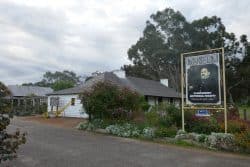
While in town visit the Old Police Station Museum, located on Albany Highway. Built by convict labour in 1868, the museum is open weekends and public holidays 10.00am to 2.00pm or by appointment. (08) 9851 1163
The Claude Hotchin Art Collection and St Werburghs Chapel are also worth visiting while in town. The Mount Barker Visitor Centre is located at 622 Albany Highway and can provide further details.
To find artists and exhibitions throughout the Great Southern this spring please visit https://artsouthwa.com.au The 2020 Southern Art and Craft Trail has gone online and the website is the best point of information.